
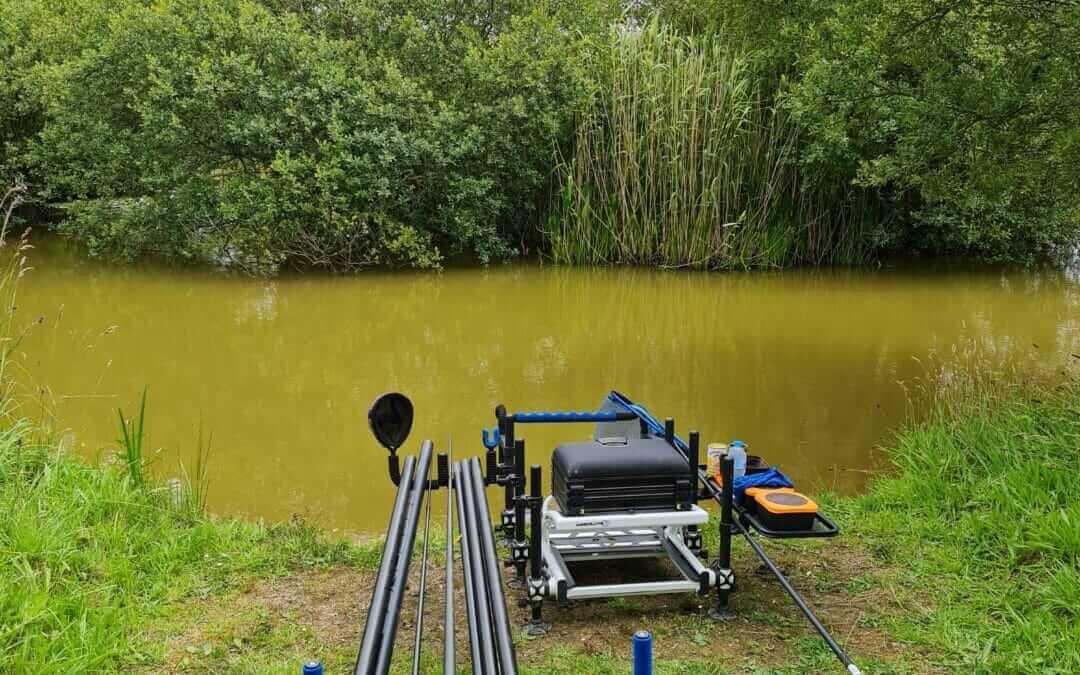
Why the pole? Pole fishing is one of the easiest ways to start coarse fishing. There’s no casting or reel to master: you simply ship the pole out, lower your float rig into the same spot every time and watch the float. It’s very accurate, which means more bites. On our lakes, Butterfly and Mayfly are ideal for pole fishing, and a short whip is perfect for children.
Plenty of guests try pole fishing for the first time on holiday with us. Here’s a beginner-friendly guide to getting started.
Whip or pole?
A whip is a short telescopic pole, usually a few metres long, with the line tied directly to the tip. It’s cheap, simple and brilliant for small fish and youngsters.
A pole is longer and made of sections that slot together. Instead of a fixed line, the tip is fitted with a length of elastic that stretches when a fish pulls, acting like a shock absorber. This lets you land bigger fish on fine line. For our lakes, where carp turn up regularly, a pole with suitable elastic is the better choice for adults.
The basic setup
- Float rig: a light pole float, line, a few small shot and a barbless hook. Ready-made rigs on a winder are a good starting point.
- Elastic: match it to the fish you expect. Lighter elastic is fine for roach and rudd on Butterfly, but on Mayfly use something stronger as carp are common. On Dragonfly you’d need very strong elastic, and carp rods are usually the better choice there.
- Pole roller or a flat spot behind you to slide the pole back on.
- Landing net, unhooking mat and disgorger. These are required on our lakes.
If you’re missing something, our tackle shop at reception can help.
Step 1: Find the depth
Clip a plummet (a small weight) onto your hook and lower it in. Adjust the float until just the tip shows above the surface when the plummet is on the bottom. Then remove the plummet. Now your bait will sit just on or just off the bottom, which is where most fish feed.
Step 2: Pick a spot and feed it
Choose a spot you can reach comfortably, often a few metres out or near a reed bed or lily pads. Throw in a small pinch of bait, such as a few grains of sweetcorn or pellets. Keep feeding a little every few minutes. Little and often builds the swim without filling the fish up.
Step 3: Watch the float
Lower your rig into the same spot each time and watch the tip. A bite might be a slow sink, a sharp dip or the float lifting and lying flat. When it goes under, lift the pole smoothly upwards. There’s no need for a big strike with a barbless hook.
Step 4: Play the fish
If it’s a bigger fish, the elastic will stretch out of the pole tip. Don’t panic. Keep the pole up at an angle, let the elastic do the work and, once the fish tires, remove sections of the pole behind you until you can slide the net under it. Always net fish rather than swinging them in.
Step 5: Unhook and release
Lay the fish on a wet unhooking mat, wet your hands, slip the barbless hook out with a disgorger, then return the fish gently. Keepnets aren’t used on our lakes.
Frequently asked questions
Is pole fishing good for beginners?
Yes. There is no casting to learn and your bait goes in the same spot every time, so beginners and children often catch more fish on the pole than with a rod and reel.
Which lake at Perran Springs is best for pole fishing?
Butterfly Lake is ideal for pole and waggler fishing, and Mayfly Lake is also well suited to the pole. Use stronger elastic on Mayfly because of the carp.
What bait should I use on the pole?
Sweetcorn, small pellets and bread work well on our lakes. We do not sell maggots or live bait, so bring those with you if you want to use them.
Fishing is free for all our guests. Read our guide to fishing holidays in Cornwall, then book your stay and give the pole a go.